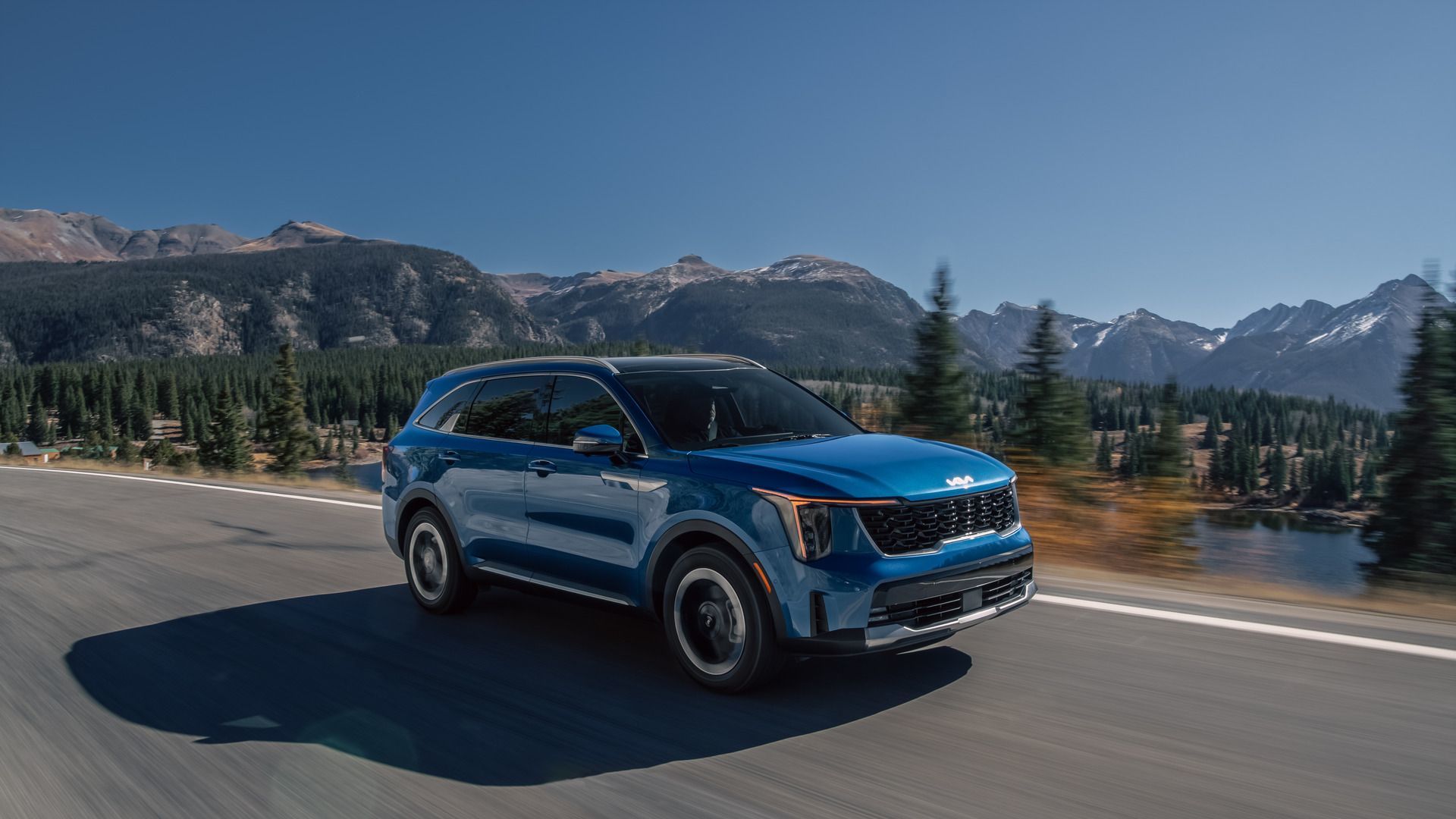
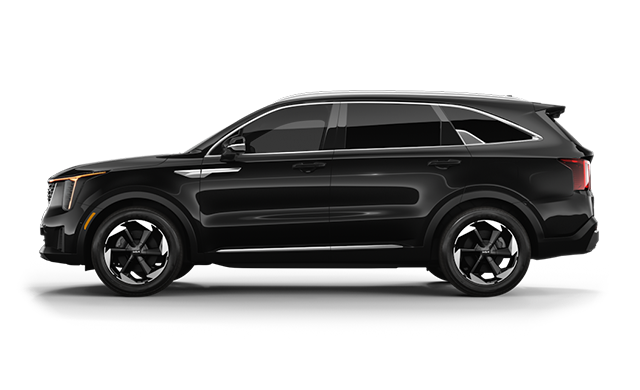
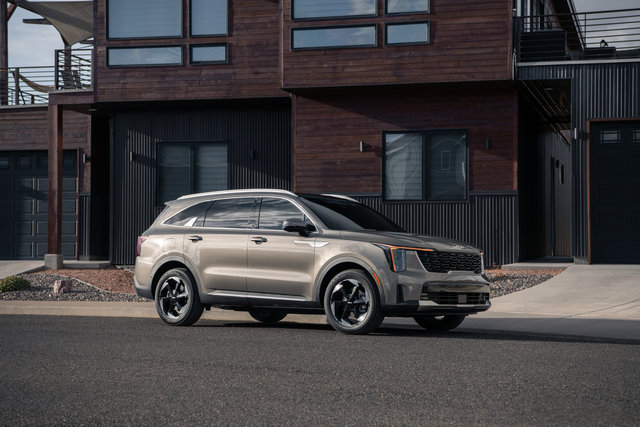
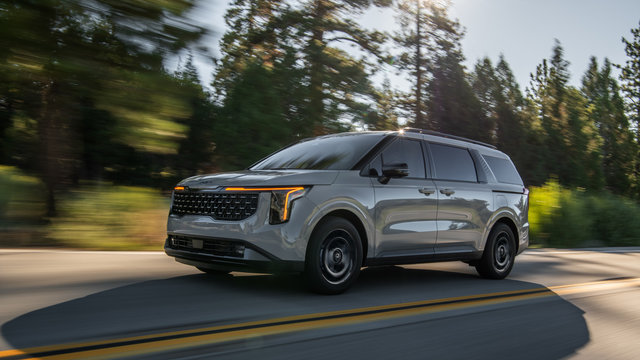
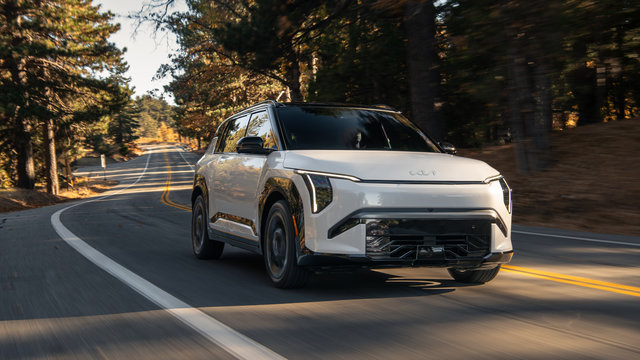
Kia's hybrid lineup offers two distinct paths for Ontario drivers: the Sportage HEV's compact efficiency or the Sorento HEV's three-row versatility. Both share the same 1.6-litre turbo hybrid architecture, both deliver standard AWD across every configuration, and both target buyers seeking fuel economy without range anxiety. The question isn't which hybrid works better - it's which platform matches your daily reality. For drivers who prioritize responsive power, predictable efficiency, and a lower entry price over maximum cargo volume, the Sportage HEV builds a stronger case across all three trim levels.
|
Feature
|
Sportage HEV
|
Sorento HEV
|
|
Horsepower
|
232 hp
|
227 hp
|
|
Torque
|
271 lb-ft
|
258 lb-ft
|
|
Combined Fuel Economy
|
6.7 L/100km
|
7.0 L/100km
|
|
Cargo Volume
|
977-2,087 L
|
2,139 L
|
|
Towing Capacity
|
907 kg (2,000 lb)
|
750-907 kg (1,653-2,000 lb)
|
The Power Equation: Where 5 hp and 13 lb-ft Change Everything
The Sportage HEV's 232 hp and 271 lb-ft of torque deliver measurably sharper throttle response than the Sorento HEV's 227 hp and 258 lb-ft output. That 5-horsepower gap translates to quicker highway merges and more confident passing authority on Highway 6 between Owen Sound and Markdale. The torque advantage - 271 lb-ft versus 258 lb-ft - matters most during low-speed acceleration, where the permanent magnet synchronous motor in both vehicles contributes peak torque from standstill.
While the Sorento HEV's slightly lower output reflects its larger curb weight and three-row packaging, the Sportage HEV's power-to-weight ratio delivers more responsive daily driving without requiring a larger engine or compromising hybrid efficiency. For Ontario drivers who cover mixed rural and urban routes, the Sportage HEV's torque advantage provides stronger control during winter acceleration and better composure on gravel approaches - conditions where immediate throttle response matters more than outright cargo capacity.
Fuel Economy: The 0.3 L/100km Reality Check
The Sportage HEV returns 6.7 L/100km combined with near-identical city (6.7 L/100km) and highway (6.6 L/100km) figures. The Sorento HEV delivers 7.0 L/100km combined, with 7.2 L/100km city and 6.7 L/100km highway. That 0.3 L/100km gap between the two models costs roughly $4.50 per 1,000 km at current Ontario fuel prices - a modest difference that accumulates over annual driving.
The Sportage HEV's consistency across city and highway cycles reflects its lighter platform and more efficient energy recovery during deceleration. The Sorento HEV's higher city consumption stems from its larger mass and three-row architecture, which requires more energy to accelerate from stops. For drivers who split time between Highway 26 coastal routes and downtown Owen Sound errands, the Sportage HEV's predictable efficiency eliminates the fuel economy variance that larger hybrids often show between driving environments.
Trim Strategy: Three Configurations, One Powertrain
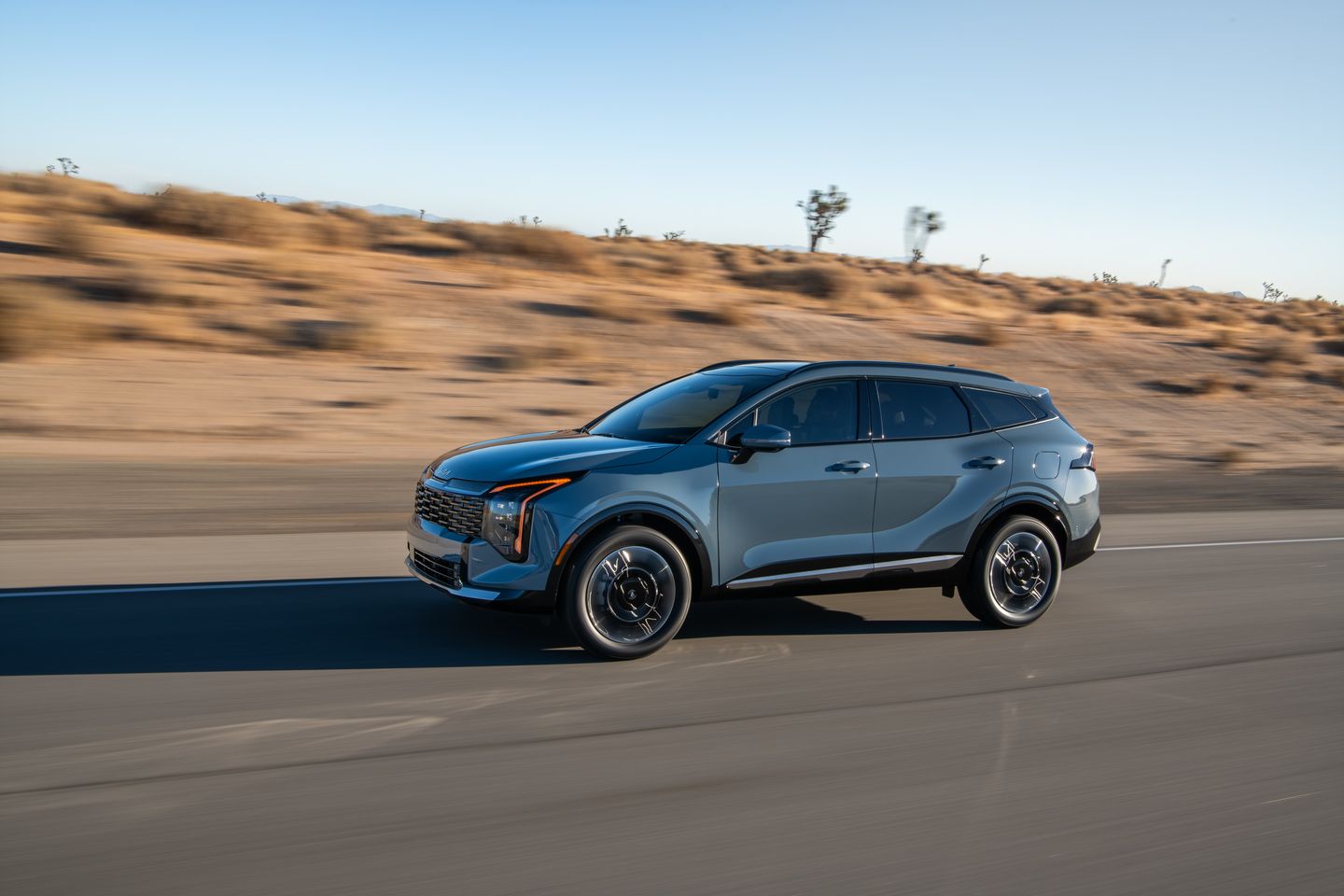
The Sportage HEV lineup spans three trim levels - EX ($41,245), EX Premium ($44,245), and SX ($47,745) - with AWD standard across the range. All three trims share the same 1.6-litre turbo hybrid powertrain, 6-speed automatic transmission, and 2,000-lb towing capacity. The pricing structure spaces trims at $3,000 intervals, allowing buyers to select features without changing fundamental capability.
The Sorento HEV offers LX, EX, and SX trims with AWD standard, though specific pricing was not available. The Sorento's trim progression adds similar feature sets - cloth seats on LX, synthetic leather on EX, genuine leather and panoramic sunroof on SX - but the larger platform carries a higher base cost to accommodate three-row seating and the associated structural reinforcement.
For buyers who need hybrid efficiency without third-row seating, the Sportage HEV's delivers the same powertrain technology at a more accessible price than the Sorento HEV's larger configuration.
What Each Trim Delivers
EX ($41,245): The base hybrid configuration includes AWD, the full 232-hp powertrain, regenerative braking, and the dual-level cargo floor system. The EX establishes the Sportage HEV's core value proposition - proven hybrid architecture without premium feature requirements.
EX Premium ($44,245): The mid-tier trim adds $3,000 of content over the EX, targeting buyers who want enhanced comfort and convenience features while maintaining the same powertrain output and towing capacity. The EX Premium balances hybrid efficiency with upgraded interior appointments.
SX ($47,745): The top trim delivers the full feature set at $6,500 above the EX, positioning the Sportage HEV as a premium compact hybrid with all available technology. The SX maintains the same 232 hp and 2,000-lb towing as lower trims - feature upgrades don't change mechanical capability.
The Sorento HEV's LX trim provides cloth seating and LED headlights as the entry configuration. The EX adds synthetic leather, heated steering wheel, and wireless charging. The SX brings genuine leather, panoramic sunroof, Bose premium audio, 12.3-inch digital cluster, and ventilated front seats. The Sorento's trim strategy follows a similar progression but packages the upgrades around three-row functionality rather than compact efficiency.
Cargo and Space: The 52-Litre Decision
The Sportage HEV offers 977-2,087 litres of cargo volume with the dual-level floor system, providing flexible storage configurations for compact SUV needs. The Sorento HEV delivers 2,139 litres of maximum cargo capacity, a 52-litre advantage when both vehicles have rear seats folded. That difference - roughly the volume of a large duffel bag - reflects the Sorento's longer wheelbase and three-row platform.
The Sportage HEV's 1,050 mm of rear legroom prioritizes second-row passenger comfort over absolute cargo volume, a trade-off that works for buyers who carry people more often than maximum loads. The dual-level cargo floor allows height adjustment for taller items without sacrificing load capacity.
While the Sorento HEV's larger cargo volume accommodates bulk items like furniture or building materials, the Sportage HEV's 977-2,087 litre range covers typical compact SUV hauling - camping gear, sports equipment, weekly groceries - without the fuel consumption penalty of a larger platform. For Ontario drivers who don't regularly transport three rows of passengers or oversized cargo, the Sportage HEV's space efficiency delivers practical utility without excess capacity.
Towing: 2,000 Pounds Across the Board
Both vehicles handle 907 kg (2,000 lb) of trailer weight, covering small utility trailers, jet skis, and compact camping trailers common to Georgian Bay recreation. The Sportage HEV's 2,000-lb rating applies across all three trims, maintaining consistent capability regardless of feature selection.
The Sorento HEV's towing range spans 1,653-2,000 lb depending on configuration, with the maximum rating matching the Sportage HEV's output. The Sorento's three-row platform provides more interior space for passengers during towing trips, but the actual trailer capacity remains identical to the Sportage HEV's rating.
For buyers who tow occasionally - boat launches at Sauble Beach, equipment trailers to cottage properties - the Sportage HEV's 2,000-lb capacity handles the requirement without the larger footprint and higher fuel consumption of a three-row platform.
The Verdict: Power and Value Over Maximum Space
The Sportage HEV wins for Ontario drivers who prioritize responsive hybrid performance and lower entry pricing over three-row seating capacity. The 232-hp powertrain delivers stronger acceleration and better throttle response than the Sorento HEV's 227-hp output, while the 6.7 L/100km combined efficiency beats the Sorento's 7.0 L/100km rating. starting price makes hybrid technology accessible without requiring buyers to pay for third-row functionality they don't need.
The Sorento HEV serves families who require six-passenger seating and maximum cargo volume for regular use - road trips with extended family, bulk hauling, or scenarios where the extra 52 litres of cargo space becomes essential. But for couples, small families, and drivers who cover mixed Ontario highways without three-row requirements, the Sportage HEV's combination of stronger power, better efficiency, and lower cost resolves the hybrid decision decisively.
Visit Owen Sound Kia in Owen Sound to compare both hybrid platforms in person and confirm which configuration matches your daily driving reality.
To learn more about the 2027 Kia Sportage HEV, visit Kia.ca