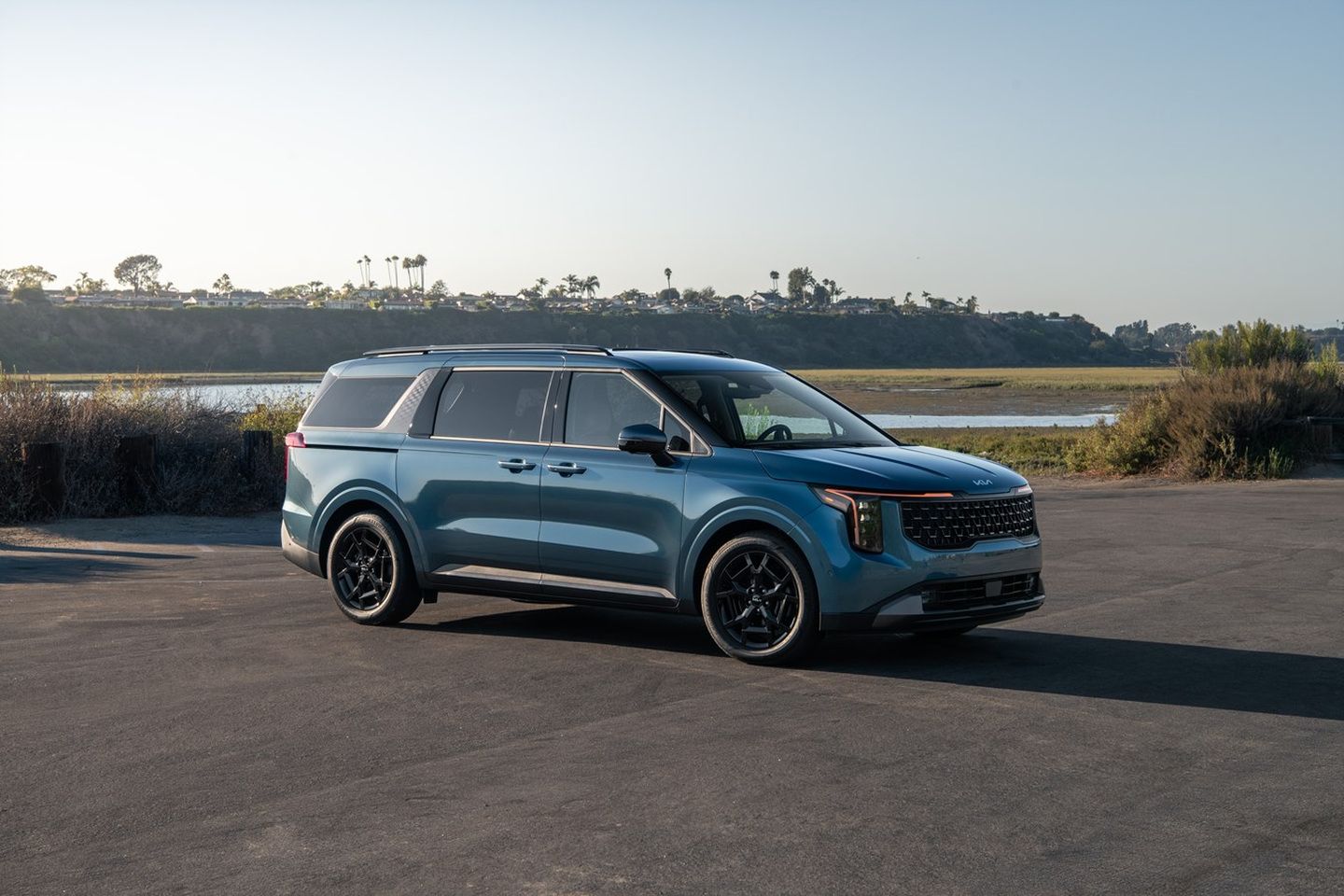
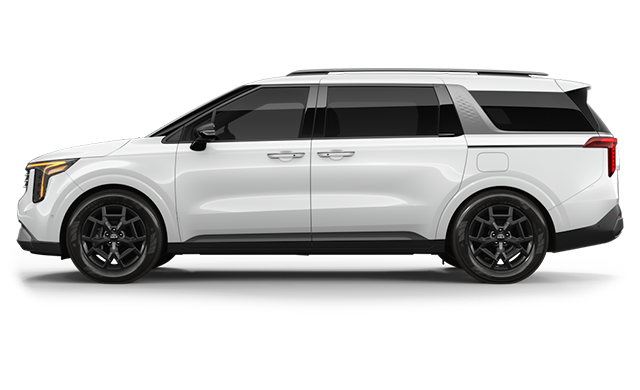
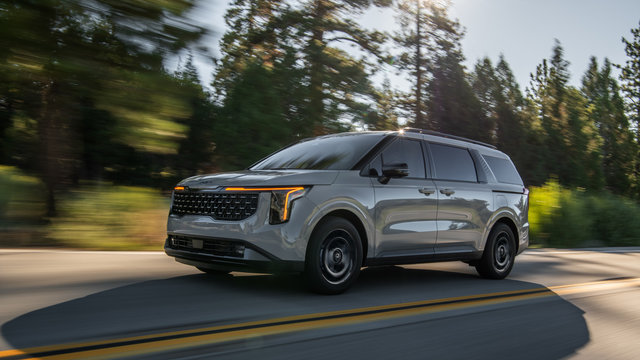
The 2026 Kia Carnival is available with two distinct powertrains, and the choice between them is more than a matter of fuel economy. The 3.5 L V6 delivers 288 horsepower and a 3,500 lb towing capacity through an 8-speed automatic transmission. The 1.6 L turbocharged hybrid produces 242 hp combined with 270 lb-ft of torque, paired with a 6-speed automatic. Both run on regular unleaded fuel, both offer front-wheel drive, and both share the same 4,110 L maximum cargo volume and up to 8-passenger seating. The differences come down to how you plan to use the vehicle and what matters most for your family's daily routine in Ontario.
For families in Owen Sound and Grey County, that decision often hinges on a few key factors: how many kilometres you drive each week, how often you tow a boat or trailer, and how much you value reducing your annual fuel bill. This guide breaks down the two powertrains side by side so you can walk into the showroom with a clear picture of which Carnival fits your life.
At a Glance: Carnival V6 vs. Carnival HEV
|
Specification
|
Carnival V6
|
Carnival HEV
|
|
Engine
|
3.5 L V6 GDI
|
1.6 L Turbo 4-cyl. + electric motor
|
|
Horsepower
|
288 hp @ 6,400 rpm
|
242 hp (combined)
|
|
Torque
|
260 lb-ft @ 5,000 rpm
|
270 lb-ft (combined)
|
|
Transmission
|
8-speed automatic
|
6-speed automatic
|
|
Drive type
|
FWD
|
FWD
|
|
Combined fuel economy
|
11.3 L/100 km
|
7.2 L/100 km
|
|
Towing capacity
|
3,500 lb
|
3,000 lb
|
|
Fuel tank
|
72 L
|
72 L
|
|
Maximum cargo volume
|
4,110 L
|
4,110 L
|
|
Minimum cargo volume
|
1,139 L
|
1,139 L
|
|
Recommended fuel
|
Regular unleaded
|
Regular unleaded
|
Performance and Towing
The V6 Carnival is the more powerful option on paper. Its 3.5 L engine produces 288 hp and 260 lb-ft of torque, and the 8-speed automatic transmission provides smooth, responsive shifts across a wide rev range. For families who frequently tow—a boat to Sauble Beach, a utility trailer loaded with gear for a move, or a camper for weekend getaways along the Bruce Peninsula—the V6's 3,500 lb towing capacity gives you more headroom.
The hybrid Carnival takes a different approach. Its 1.6 L turbocharged 4-cylinder engine works alongside a permanent magnet synchronous motor to deliver 242 hp and 270 lb-ft of combined torque. That torque figure is actually 10 lb-ft higher than the V6, and it arrives earlier in the rev range thanks to the electric motor's instant response. Towing capacity is rated at 3,000 lb, which is still enough for a small to mid-size boat or a loaded utility trailer. For families whose towing needs stay under that threshold, the hybrid gives up very little in daily capability.
- Choose V6 if: You tow above 3,000 lb regularly or prioritize peak horsepower
- Choose HEV if: Your towing stays under 3,000 lb and you value the electric motor's low-end torque response
Fuel Economy and Annual Cost Differences
This is where the two powertrains diverge most sharply. The V6 is rated at 11.3 L/100 km combined (13.0 city / 9.3 highway), while the hybrid achieves 7.2 L/100 km combined (6.9 city / 7.5 highway). Both use a 72 L fuel tank filled with regular unleaded.
Over 20,000 km of annual driving, the V6 would consume approximately 2,260 litres of fuel. The hybrid would consume approximately 1,440 litres over the same distance—a difference of roughly 820 litres per year. At current Ontario fuel prices, that gap can translate to well over a thousand dollars annually in fuel savings for the hybrid.
The identical 72 L fuel tank also tells a range story. At its combined rating, the V6 Carnival can travel roughly 637 km on a full tank, while the hybrid can cover approximately 1,000 km before needing a fill-up. For families making regular trips between Owen Sound and Toronto, or driving up to Tobermory and back, that extended range means fewer stops and more time on the road.
- V6 annual fuel use (20,000 km): ~2,260 L
- HEV annual fuel use (20,000 km): ~1,440 L
- Annual difference: ~820 fewer litres with the hybrid
Trim Lineup and Available Features
The V6 and HEV Carnival lineups are structured slightly differently, though both offer a progression from well-equipped base models to feature-rich top trims.
The V6 Carnival is available in six trims: LX, LX+, EX, EX+, SX, and SX+. The HEV lineup starts at the LX+ level and is available in four trims: LX+, EX, SX, and SX+.
Both powertrains share key standard features across the lineup, including a 12.3-inch multimedia interface with integrated navigation, Apple CarPlay and Android Auto, dual power sliding doors, a smart power liftgate, advanced smart cruise control with stop and go, and heated front seats and steering wheel on LX+ and above. Multi-zone automatic climate control, rear HVAC controls, and a heated windshield are also standard on both.
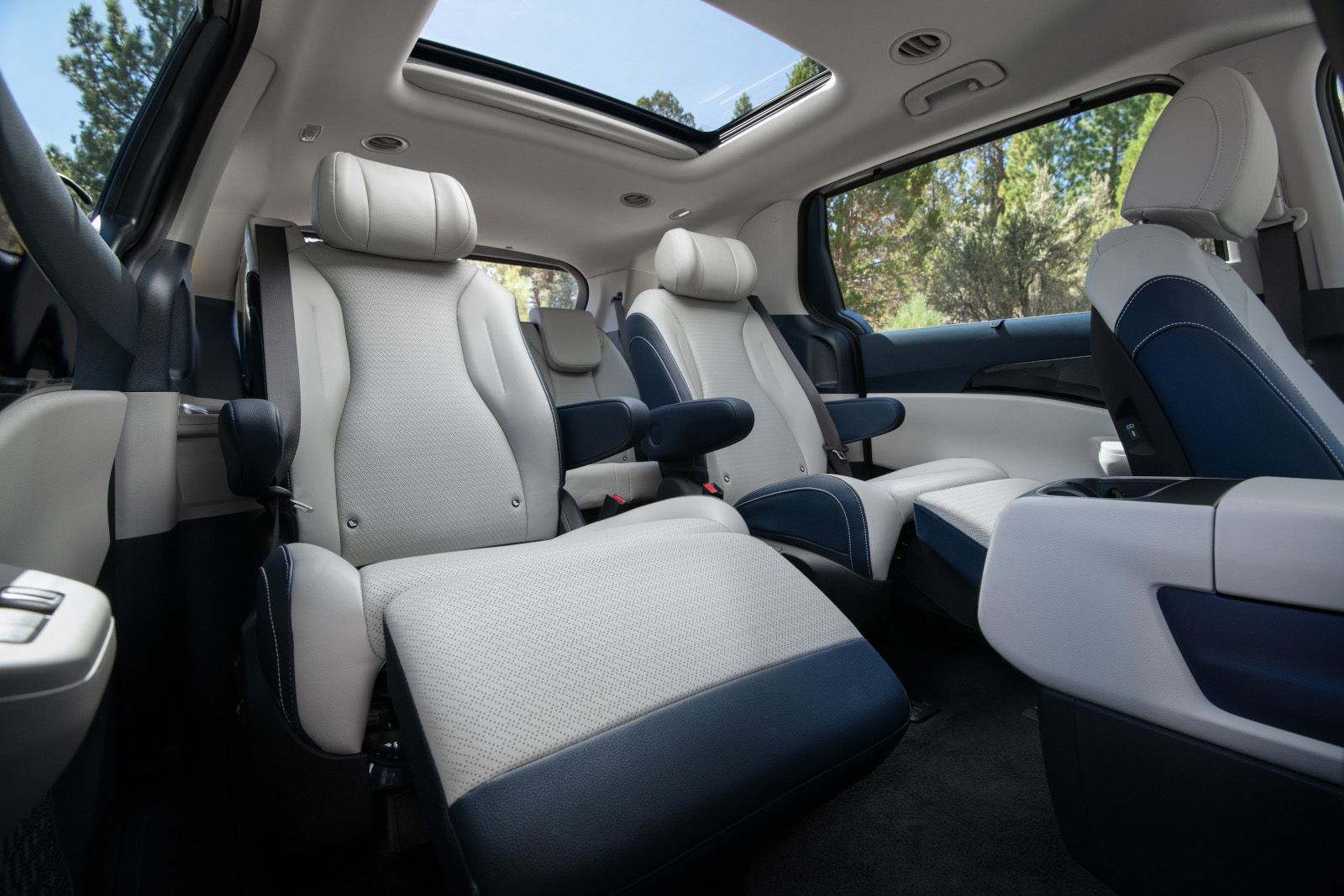
At the SX and SX+ level, both the V6 and HEV gain access to Bose premium audio, a heads-up display, 360-degree surround-view monitor, blind-spot view monitor, leather seating, air-cooled front seats, and the Dark Edition exterior treatment with 19-inch black alloy wheels. The SX+ adds 7-passenger seating with second-row VIP Lounge seats—power-reclining captain's chairs with leg rests and a one-touch Relaxation Mode—along with heated and air-cooled second-row seats.
Interior Space and Family Practicality
Regardless of powertrain, the Carnival cabin is identical in terms of passenger and cargo dimensions. Maximum cargo volume reaches 4,110 L with all rear seats folded, while minimum cargo volume behind the third row is 1,139 L. Second-row seats are removable, and the third row folds flat into the floor with a 60:40 split, giving you full flexibility to configure the interior for passengers, cargo, or both.
Standard 8-passenger seating uses an easy walk-in second row with auto-fold and slide functions, making third-row access straightforward for families with young children. The available 7-passenger configuration on SX+ replaces the second-row bench with the VIP Lounge captain's chairs, which is worth considering if second-row passenger comfort is a priority on longer drives through Grey County and beyond.
Both powertrains also share practical cold-weather features that matter for Ontario: a heated windshield, heated washer nozzles, and available heated rear seats help keep the cabin comfortable through the harshest months.
Which Carnival Powertrain Is Right for You?
The V6 Carnival is the right choice for families who need maximum towing capacity, prefer the wider six-trim lineup for more granular price entry points, or simply want the proven power delivery of a naturally aspirated V6. It does the job it has always done well, and the 8-speed transmission keeps it refined on highway drives.
The hybrid Carnival is built for families who drive high annual kilometres and want to cut their fuel consumption by roughly 36% compared to the V6—without giving up meaningful interior space, cargo capacity, or day-to-day capability. Its 3,000 lb towing capacity covers the needs of most recreational towers, and the hybrid powertrain's low-end torque makes city driving and stop-and-go traffic feel effortless.
For many families in the Owen Sound area, the hybrid's fuel savings over a standard ownership period can be substantial, especially if your routine includes regular highway kilometres to Barrie, Collingwood, or the GTA. If your towing needs are light to moderate and you value long-range efficiency, the HEV makes a strong case.
Find Your Carnival at Owen Sound Kia
Both the 2026 Kia Carnival V6 and Carnival HEV are available now at Owen Sound Kia. Our team can walk you through each trim level, help you compare the powertrains, and arrange a test drive so you can feel the difference for yourself. Book your visit today at our Owen Sound dealership and find the Carnival that fits your family.
To learn more about the 2026 Kia Carnival, visit Kia.ca