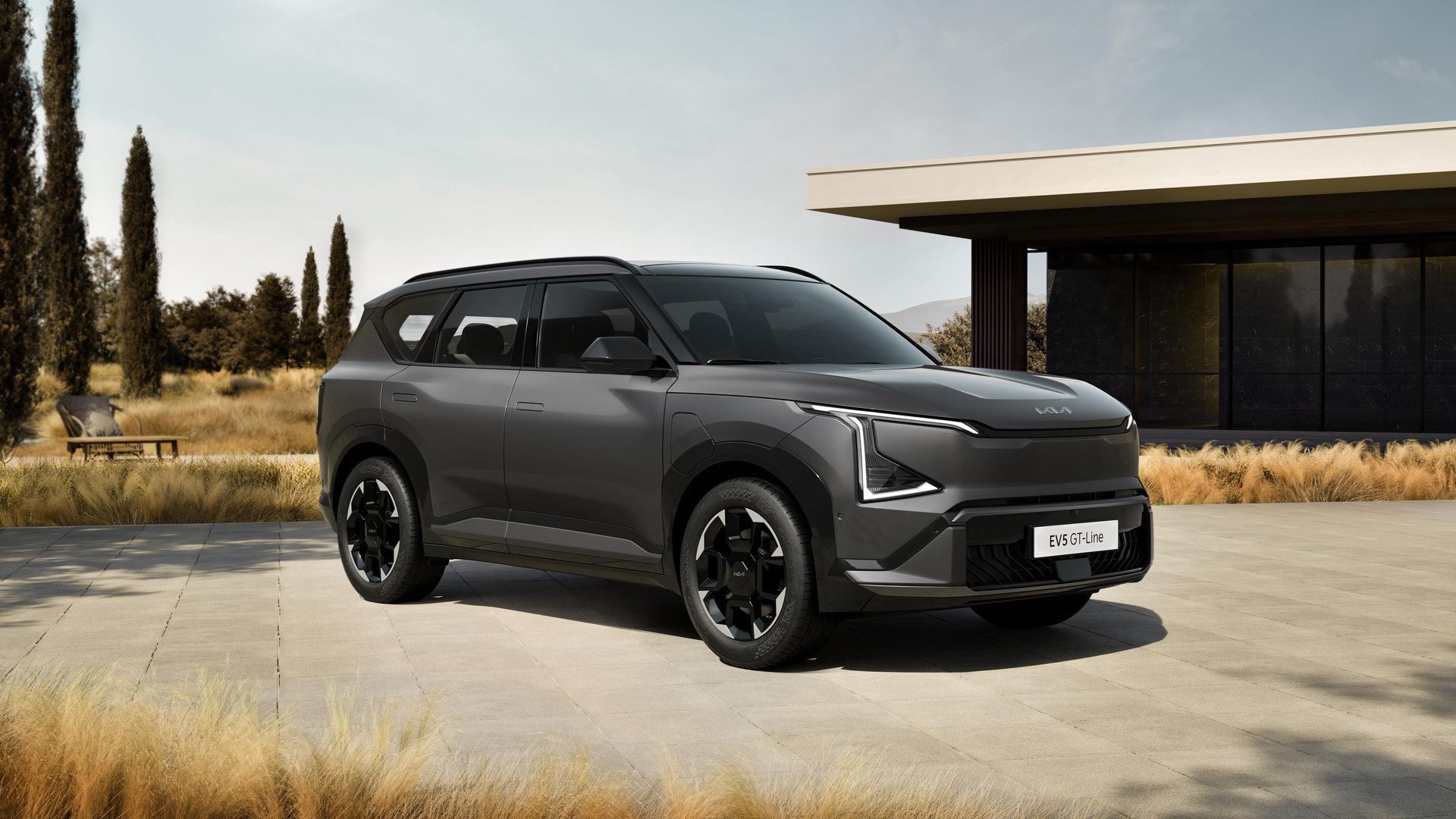
The 2027 Kia EV5 represents a strategic decision by Kia Canada to secure a compact electric SUV that the United States market won't receive. Built on the 800-volt Electric Global Modular Platform (E-GMP), this family-focused electric vehicle brings rapid charging capabilities and estimated range figures that position it directly against established compact SUVs like the Toyota RAV4 and Honda CR-V—but with a fully electric powertrain and a starting price that undercuts premium EV competitors by substantial margins.
For Ontario drivers evaluating the transition to electric vehicles, the EV5 addresses the core concerns that have historically limited EV adoption: charging speed, winter range stability, and price accessibility. Reservations open in December 2025, with vehicles expected to reach Canadian dealerships in spring 2026, giving Owen Sound families a clear timeline for planning the transition from gasoline to electric operation.
E-GMP Architecture Brings Premium Charging to Mass-Market Pricing
The Electric Global Modular Platform is the same foundation used in the flagship EV9 and performance-oriented EV6. The key differentiator is the 800-volt electrical architecture, which allows the EV5 to charge from 10 to 80 percent in under 30 minutes when connected to a 350 kW DC fast charger. This charging speed matters because it transforms the electric vehicle from a local commuter into a viable option for longer trips across Ontario.
A typical charging stop during highway travel to Toronto or Ottawa takes approximately the same time as a fuel stop plus rest break, eliminating the range anxiety that has prevented many families from considering electric vehicles. The North American Charging Standard (NACS) port provides access to thousands of fast-charging stations across Canada, with Tesla Supercharger network compatibility expanding available charging infrastructure.
Two battery configurations will be offered. The standard-range model uses a 60.3 kWh battery pack targeted at urban drivers and families using the EV5 as a second vehicle. The long-range variant incorporates an 81.4 kWh battery, pushing estimated range toward 450-500 km based on global testing standards—though real-world Canadian driving conditions typically reduce these figures by 15-20 percent.
Front-Wheel Drive and All-Wheel Drive Address Different Needs
The EV5 will be offered with both front-wheel drive and all-wheel drive configurations, allowing families to select traction capabilities based on their driving environment. Front-wheel drive models suit urban and suburban driving where winter tires provide adequate traction on maintained roads. All-wheel drive variants deliver the confidence needed for rural routes, unplowed cottage access roads, and winter conditions where additional traction management prevents loss of control.
The all-wheel drive system uses dual motors—one on each axle—providing instant torque distribution to whichever wheels have traction. Unlike mechanical all-wheel drive systems that react to wheel slip, electric motors can predict and prevent slip through continuous monitoring of individual wheel speeds and road conditions.
Heat Pump Technology Preserves Winter Range
Ontario winters create the most challenging operating conditions for electric vehicles. Cold temperatures reduce battery efficiency, while cabin heating draws significant power from the battery pack. The EV5 addresses both issues through a heat pump system that operates far more efficiently than traditional resistive heaters.
Heat pumps work by extracting thermal energy from outside air—even in sub-zero temperatures—and concentrating it for cabin heating. This process uses approximately one-third the electrical energy required by resistive heaters, preserving range during winter months when heating demands are highest. The system can also precondition the cabin while the vehicle is still plugged in, warming the interior without depleting the battery before departure.
Battery thermal management systems maintain optimal operating temperature regardless of external conditions. During cold weather, the system warms the battery pack to improve charging acceptance and discharge efficiency. In summer heat, cooling prevents thermal degradation that can reduce battery capacity over the vehicle's lifespan.
V2L Functionality Turns the EV5 into a Mobile Power Source
Vehicle-to-Load capability allows the EV5 to supply power to external devices through both interior and exterior 120-volt outlets. Total output capacity reaches 1.9 kW, sufficient to operate laptops, lighting, portable refrigerators, power tools, and camping equipment without requiring a separate generator.
For families in Ontario, this functionality extends beyond camping applications. During power outages, the EV5 can run essential household devices. Contractors can power tools on job sites without generator noise or emissions. Outdoor events gain mobile power access for sound systems, lighting, or food preparation equipment.
The system operates through a simple interface in the vehicle settings menu, activating power outlets when needed and automatically shutting down when battery charge reaches preset minimum levels to ensure sufficient range for driving home.
Interior Space Matches Traditional Family SUVs
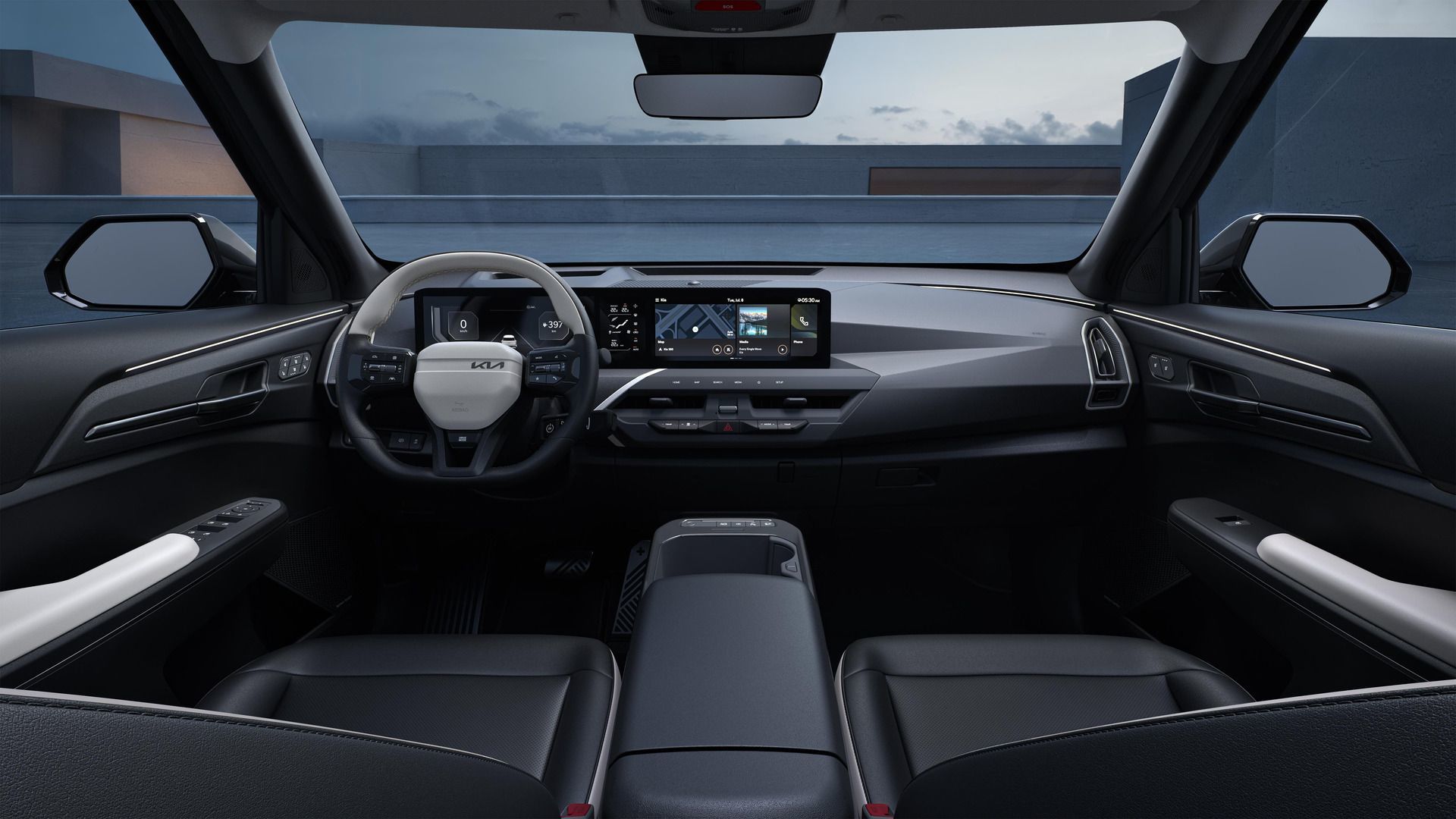
The compact SUV segment has historically prioritized efficient packaging, and the EV5 delivers interior volume that matches gasoline competitors despite the battery pack location. Rear seat legroom accommodates adult passengers comfortably, while headroom benefits from the flat-floor design enabled by battery placement between the axles.
Cargo capacity behind the rear seats provides space for weekly grocery runs, sports equipment, and luggage for family trips. The rear seats fold in a 60/40 split configuration, allowing long items to be transported while maintaining seating capacity for rear passengers when needed.
The interior design follows Kia's current direction toward minimalist interfaces with dual digital displays integrating instrumentation and infotainment functions. Physical controls remain for climate and volume adjustment—a deliberate choice that maintains usability while driving and accommodates drivers who prefer tactile feedback over touchscreen interaction.
Safety Systems Standard Across All Trims
Forward collision-avoidance assist monitors the road ahead for vehicles, pedestrians, and cyclists, providing automatic emergency braking when potential collisions are detected. The system works at speeds from 10 km/h to highway velocities, with different detection ranges optimized for urban and rural driving conditions.
Lane keeping assist and lane following assist maintain lane position during highway driving. Lane keeping assist provides steering corrections when unintended lane departures are detected, while lane following assist actively centres the vehicle within lane markings, reducing driver fatigue during extended highway travel.
Blind spot collision-avoidance assist uses radar sensors in the rear bumper to detect vehicles in adjacent lanes. When a vehicle is detected in the blind spot zone and the driver activates the turn signal, the system provides visual warnings and can apply differential braking to prevent lane changes into occupied space.
Smart cruise control with stop-and-go capability maintains preset speeds and following distances, automatically adjusting to match traffic flow. The system can bring the vehicle to a complete stop in congestion and resume when traffic moves, handling the repetitive acceleration and braking that creates driver fatigue during GTA commutes.
Pricing Strategy Targets Volume over Margin
The confirmed starting price of $43,495 positions the EV5 below the Tesla Model Y by approximately $14,500 and undercuts the Hyundai Ioniq 5 by roughly $700. This pricing reflects Kia's strategy to capture market share from families ready to transition to electric vehicles but unwilling to pay premium pricing for the privilege.
The value proposition extends beyond the purchase price. Operating costs for electric vehicles run significantly lower than gasoline equivalents due to reduced fuel expenses and minimal maintenance requirements. Electric motors require no oil changes, transmission servicing, or exhaust system repairs. Regenerative braking reduces brake wear, extending pad and rotor lifespan well beyond gasoline vehicle norms.
Ontario's electricity rates—particularly off-peak overnight charging rates—create favorable operating economics. A full charge of the 81.4 kWh battery at typical residential rates costs approximately $10-12, providing 450-500 km of range. Equivalent gasoline consumption for 450-500 km in a compact SUV would cost $45-60 at current fuel prices, creating monthly savings of $100-200 for families driving 15,000-20,000 km annually.
Comparing the EV5 to Current Market Alternatives
|
Feature
|
2027 Kia EV5
|
Hyundai Ioniq 5
|
VW ID.4
|
Tesla Model Y RWD
|
|
Starting Price (CAD)
|
$43,495
|
~$44,200
|
~$46,000
|
~$58,000
|
|
Battery Options
|
60.3 / 81.4 kWh
|
58 / 77.4 kWh
|
62 / 82 kWh
|
60 kWh (est)
|
|
Est. Range (Long)
|
~450-500 km
|
488 km
|
468 km
|
394 km
|
|
Charging Speed
|
10-80% <30 min
|
10-80% in 18 min
|
10-80% in 30 min
|
15 min (Supercharger)
|
|
Architecture
|
800V E-GMP
|
800V E-GMP
|
400V MEB
|
Proprietary
|
The charging speed comparison reveals the E-GMP platform advantage. While the Ioniq 5 achieves slightly faster charging times due to optimized battery chemistry and cooling, both Kia and Hyundai models substantially outperform the Volkswagen ID.4's 400-volt architecture. Tesla maintains charging speed advantages through its proprietary system and extensive Supercharger network, though NACS adoption by Kia provides access to these same stations.
Reserve Your 2027 EV5 at Owen Sound Kia
The 2027 Kia EV5 brings 800-volt charging architecture, estimated 450-500 km range, and heat pump winter efficiency to the compact electric SUV segment at $43,495. Reservations open December 2025, with spring 2026 delivery expected. Contact our team in Owen Sound to discuss how the EV5's Canada-exclusive availability, all-wheel drive capability, and V2L functionality address your family's transition to electric driving.
To learn more about the 2026 Kia EV5, visit Kia.ca