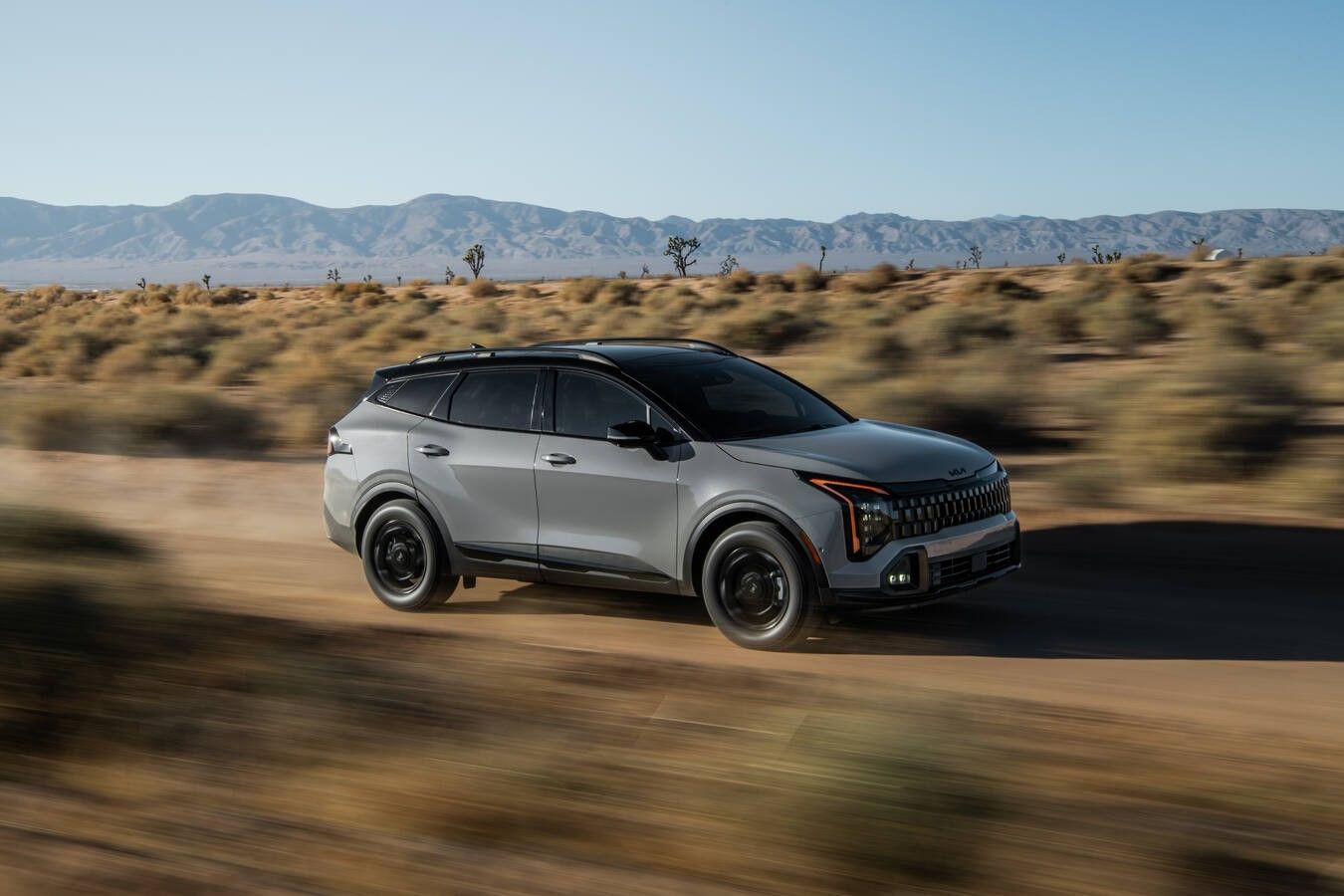
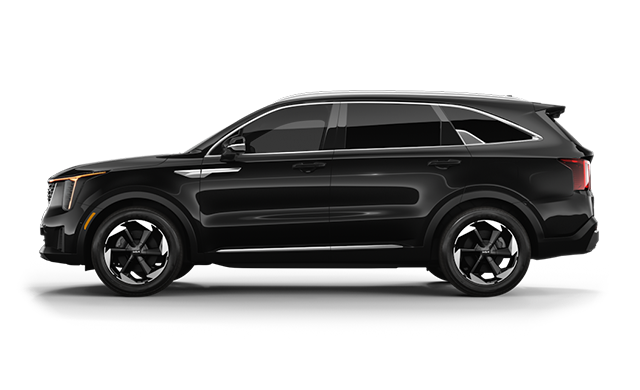
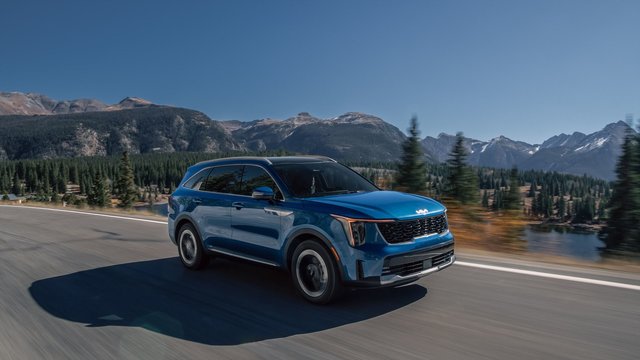
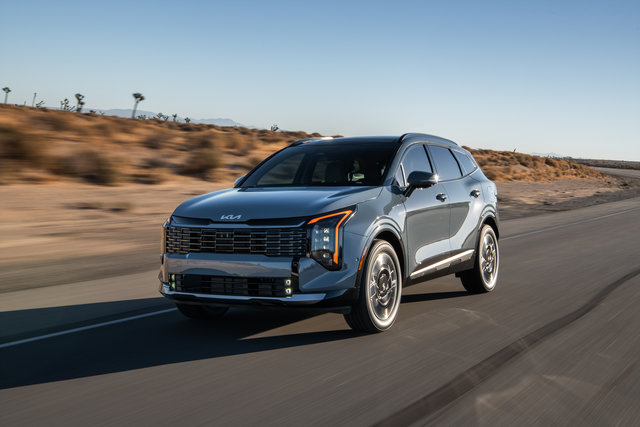
Choosing between a conventional gas engine and a hybrid powertrain is one of the most common decisions facing SUV shoppers in Ontario right now. At Owen Sound Kia, two of the most frequently cross-shopped models sit on opposite sides of that decision: the 2026 Kia Sportage with its 2.5 L gasoline engine, and the 2026 Kia Sorento HEV with its turbocharged hybrid system. They share the Kia badge and a similar family design language, but they differ in powertrain technology, fuel consumption, passenger capacity, and the types of driving they handle best.
For buyers in the Owen Sound area who regularly drive Highway 6 south toward Guelph, Highway 26 east to Collingwood, or make longer hauls into the GTA, the gap between these two powertrains has real financial consequences over time. This comparison lays out the key differences in engine output, fuel economy, cargo space, and estimated annual running costs so you can see which model lines up with your daily routine in Grey County.
At a Glance: Sportage Gas vs. Sorento HEV
Before diving into the details, here is a quick-reference table covering the core specs.
|
Spec
|
2026 Sportage (Gas)
|
2026 Sorento HEV
|
|
Engine
|
2.5 L 4-cylinder
|
1.6 L Turbo 4-cylinder + electric motor
|
|
Combined Output
|
187 hp / 178 lb-ft
|
227 hp / 258 lb-ft
|
|
Transmission
|
8-speed automatic
|
6-speed automatic
|
|
Drive Type
|
FWD standard (LX); AWD available/standard
|
AWD standard
|
|
Combined Fuel Economy
|
8.3 L/100 km (FWD) / 8.9 L/100 km (AWD)
|
~7.0 L/100 km
|
|
Fuel Tank
|
54 L
|
67 L
|
|
Towing Capacity
|
1,653–3,500 lb
|
1,650–2,000 lb
|
|
Seating
|
5 passengers
|
6 passengers
|
|
Max Cargo (behind 1st row)
|
2,098 L
|
2,139 L
|
|
Fuel Type
|
Regular unleaded
|
Regular unleaded
|
How the Powertrains Differ
The 2026 Sportage gas lineup runs a single engine across all trims: a 2.5 L naturally aspirated 4-cylinder producing 187 hp at 6,100 rpm and 178 lb-ft of torque at 4,000 rpm. It pairs with an 8-speed automatic transmission. Front-wheel drive is standard on the LX, while all other trims — X-Line, EX, EX Premium, and X-Line Limited — include AWD.
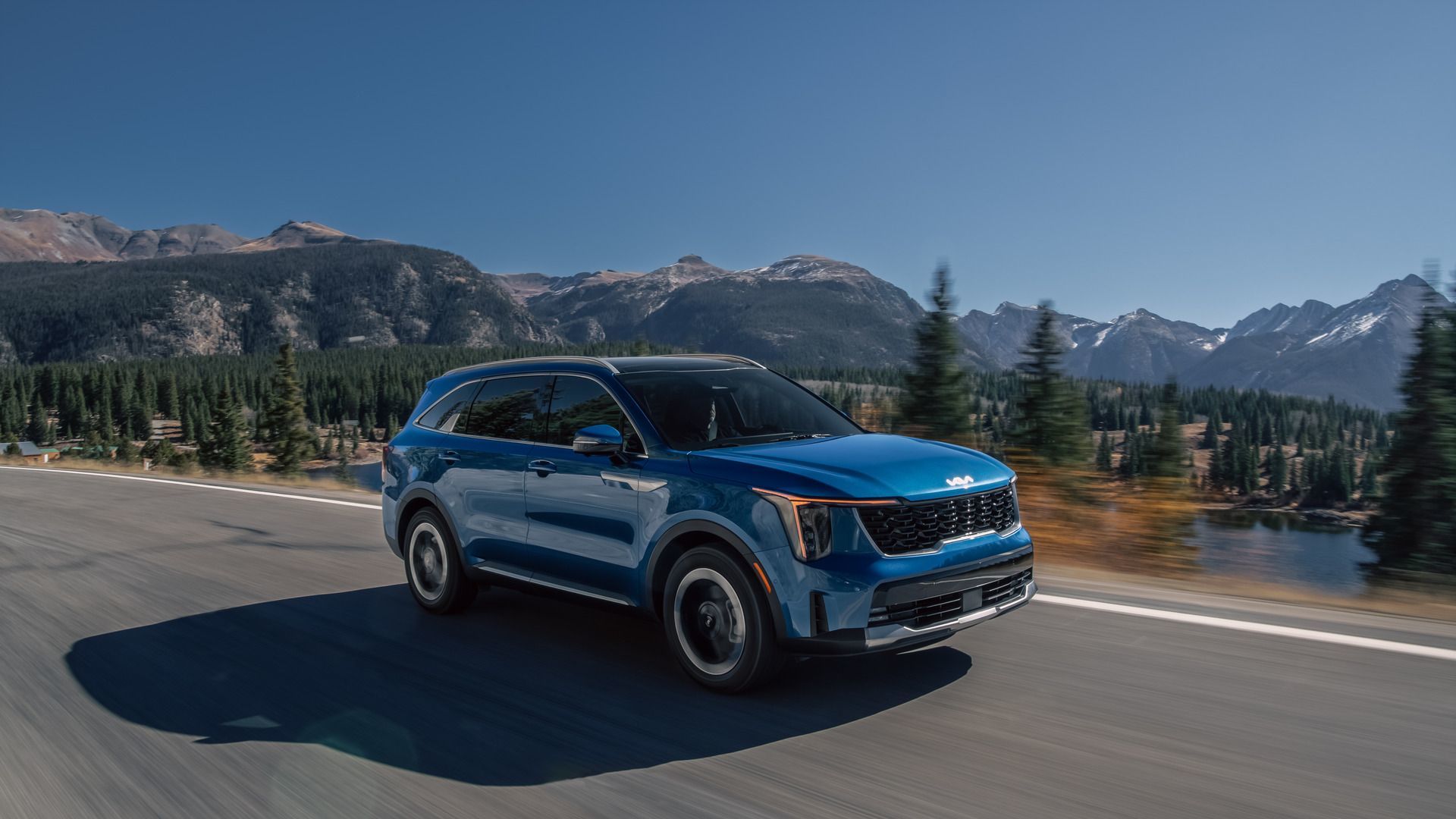
The 2026 Sorento HEV takes a different approach. It pairs a 1.6 L turbocharged 4-cylinder gasoline engine with a permanent magnet synchronous electric motor, producing a combined 227 hp and 258 lb-ft of torque through a 6-speed automatic transmission. AWD is standard across the Sorento HEV lineup. The hybrid system uses a 270-volt lithium-ion polymer battery that charges through regenerative braking — there is no plug-in requirement. The electric motor assists the gas engine during acceleration and low-speed driving, then the system recovers energy when braking or coasting.
The result is that the Sorento HEV produces 40 more horsepower and 80 more lb-ft of torque than the Sportage gas engine, while consuming less fuel. That extra torque is especially noticeable during stop-and-go driving around Owen Sound and when pulling onto highways with a full cabin.
Fuel Economy: Where the Hybrid Advantage Shows Up
This is where the comparison gets interesting for budget-minded drivers. The Sportage gas posts combined fuel economy of 8.3 L/100 km in front-wheel drive and 8.9 L/100 km with all-wheel drive. City driving pushes those figures to 9.3 and 9.9 L/100 km respectively, while highway numbers drop to 7.0 and 7.8 L/100 km.
The Sorento HEV returns 7.0 L/100 km in the city and 6.9 L/100 km on the highway — a near-flat efficiency curve that makes the hybrid equally strong in town and on longer highway stretches. That city figure is where the hybrid system earns its keep: regenerative braking recaptures energy during stops, and the electric motor shoulders more of the load at low speeds. In stop-and-go traffic on 10th Street or around the Owen Sound waterfront, the Sorento HEV uses noticeably less fuel than the Sportage.
|
Model
|
City (L/100 km)
|
Highway (L/100 km)
|
Combined (L/100 km)
|
|
Sportage FWD
|
9.3
|
7.0
|
8.3
|
|
Sportage AWD
|
9.9
|
7.8
|
8.9
|
|
Sorento HEV (AWD)
|
7.0
|
6.9
|
~7.0
|
The gap between the Sportage AWD and the Sorento HEV is roughly 1.9 L/100 km combined. On a per-tank basis, the Sorento HEV also benefits from a larger 67 L fuel tank compared to the Sportage's 54 L, meaning fewer fill-ups between Owen Sound and the GTA.
Estimating Annual Fuel Costs for Owen Sound Drivers
To put the numbers in practical terms, consider a Grey County driver covering 20,000 km per year — a reasonable estimate for someone commuting south to Collingwood or Barrie and running errands locally. Using an average fuel price of $1.55 per litre as a reference:
- Sportage AWD: 8.9 L/100 km × 20,000 km = 1,780 L → approximately $2,759 per year
- Sorento HEV: 7.0 L/100 km × 20,000 km = 1,400 L → approximately $2,170 per year
That is a difference of about $589 per year in favour of the Sorento HEV. Over a typical five-year ownership period, the fuel savings add up to roughly $2,945 — a meaningful figure that can offset the difference in purchase price between the two models.
Towing: Where the Sportage Takes the Lead
While the Sorento HEV wins on fuel economy, the Sportage gas has a clear advantage in towing capacity. The Sportage can tow between 1,653 lb on the base LX FWD and up to 3,500 lb on higher trims when properly equipped. That upper figure is enough to handle a mid-size boat, a loaded utility trailer, or a small camper — useful for owners who head to Sauble Beach, Tobermory, or the many boat launches along Georgian Bay.
The Sorento HEV, by contrast, tops out at 2,000 lb of towing capacity. The hybrid powertrain's 6-speed transmission and battery weight limit what it can safely pull. For drivers who tow regularly or plan to pull anything heavier than a small utility trailer, the Sportage gas is the stronger choice.
- Sportage Gas: up to 3,500 lb towing capacity (trim-dependent)
- Sorento HEV: up to 2,000 lb towing capacity
Passenger Space and Cargo Flexibility
The Sorento HEV is the larger vehicle and seats six passengers with standard second-row captain's chairs and a fold-flat third row. That third row is sized for children or shorter adults, and with it folded, the Sorento offers 1,090 to 1,274 L of cargo space behind the second row. Fold both the second and third rows, and total cargo volume reaches 2,139 L.
The Sportage seats five and does not have a third row. Its cargo area measures 1,036 to 1,121 L behind the second row (depending on cargo floor position), expanding to 1,962 to 2,098 L with the rear seats folded. A dual-level cargo floor on the Sportage lets you adjust the load height for taller items or create a flat surface for easier loading.
For families in Grey County who occasionally need that extra row — picking up grandchildren, carpooling for hockey tournaments, or making a run with more than five people — the Sorento HEV provides that flexibility. For couples, smaller families, or drivers who prioritize a flat cargo area over extra seating, the Sportage's layout is more straightforward.
Technology and Standard Features
Both models come well-equipped at their base levels. The 2026 Sportage gas includes a 12.3-inch multimedia display with Apple CarPlay and Android Auto, Kia Connect with over-the-air updates, smart cruise control with stop-and-go, and Forward Collision-Avoidance Assist 1.5 as standard across all trims.
The 2026 Sorento HEV shares many of the same safety and connectivity features, including a 12.3-inch multimedia interface, Apple CarPlay, Android Auto, Kia Connect, smart cruise control with stop-and-go, and a wireless phone charger. The Sorento HEV's base EX trim also includes steering wheel-mounted paddle shifters for manual gear selection, a smart power liftgate, and dual-zone automatic climate control.
At the EX level and above, the Sorento HEV adds Digital Key 2, a Bose premium audio system, a 12.3-inch Supervision instrument cluster, a full-display digital rear-view mirror, a 110V power inverter, a surround-view monitor, blind-view monitor, and Highway Driving Assist 2. These features are available on higher Sportage trims as well, though the specific trim-to-trim matchup varies between the two models.
Which Model Fits Your Driving in Grey County?
The choice between these two comes down to what you prioritize. The Sportage gas is a compact, efficient five-seater with strong towing numbers and a straightforward, single-engine lineup. It is well-suited to drivers who tow boats or trailers, prefer a smaller footprint for downtown Owen Sound parking, and want dependable AWD performance without the complexity of a hybrid system.
The Sorento HEV is a mid-size six-seater that delivers better fuel economy than the Sportage gas — despite being the larger, heavier vehicle — thanks to its hybrid powertrain. It is built for families who need that occasional third row, value lower annual fuel costs, and do not require heavy towing capacity.
Both run on regular unleaded fuel, both offer standard AWD (on most trims), and both are backed by Kia's 5-year/100,000 km comprehensive warranty with 5-year/unlimited-kilometre roadside assistance.
Experience Both at Owen Sound Kia
The best way to decide between the 2026 Sportage gas and the 2026 Sorento HEV is to drive them both. Visit our team at Owen Sound Kia to compare them side by side, and bring your questions about fuel costs, towing, and family space — we are here to help you find the right fit for your life in Grey County.
To learn more about the 2026 Kia Sportage, visit Kia.ca